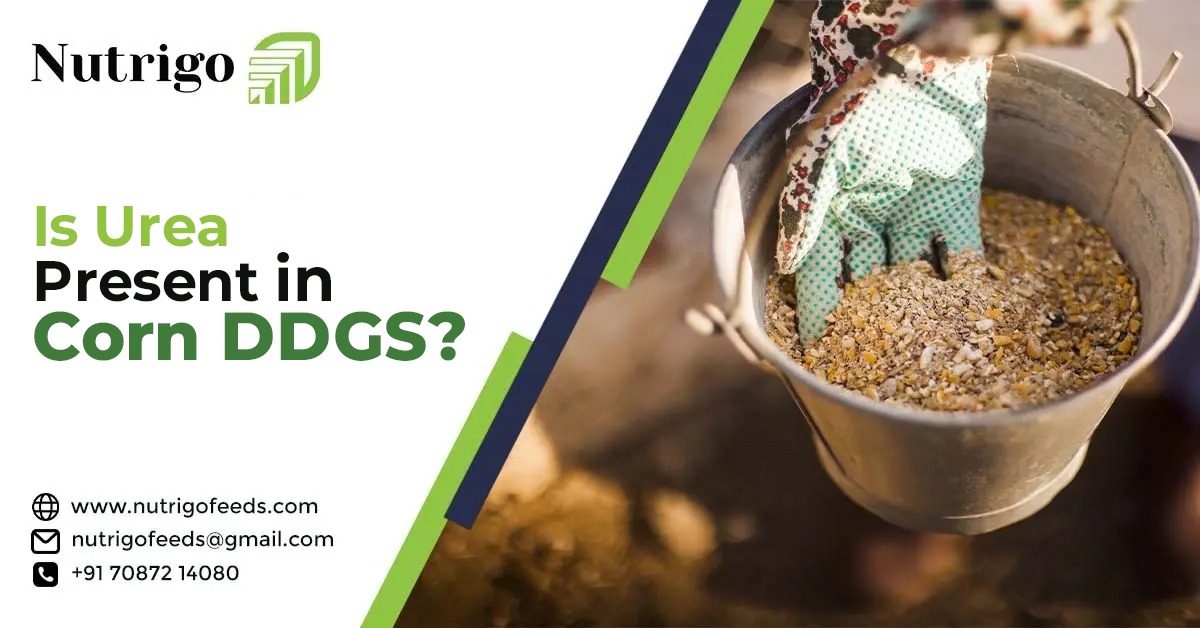
A majority of dairy producers regularly demand that their suppliers confirm the absence of synthetic additives in feed supplements. In particular, livestock owners often pose the question, Is urea present in corn DDGS? Knowledge of feed composition is very important for ensuring the high-quality health of cattle without the risk of animal poisoning. Contemporary agricultural standards impose full transparency on the raw material composition of cattle supplements. As a result, feed byproducts should be thoroughly evaluated for safety in the Indian dairy and poultry sectors.
Premium protein additives have a cost approximately in the range of 2.2 to 2.8 lakh rupees per 10 metric tons in the local market. Therefore, determination of the precise biochemical feed composition helps to ensure safe operation of livestock. Quality suppliers apply strict tests to exclude possible feed contamination with unwanted chemical products. In the end, pure botanical fermentation residue ensures proper nutrition for animals, confirming that Is urea present in corn DDGS?
Does Corn DDGS Contain Urea Naturally?
Corn DDGS consists only of pure fermented grains and therefore does not contain any chemical feed additives. Biological processes during ethanol production will never lead to the creation of a urea chemical additive. Consequently, livestock owners may safely use pure protein components of botanical origin, fully understanding that the question is “Is urea naturally present in DDGS?”
- Raw maize kernels do not contain the needed compounds that will create free urea in the organism.
- The independent laboratory analysis proves the absence of urea in true plants.
- Reputable companies provide the full purification of the final grain distiller residue.
- Quality assurance process excludes the cross-contamination of feed with any chemical elements.
- Reliable suppliers guarantee the full safety of the purchased batches of DDGS.
Is there any urea in DDGS? The testing protocol proves the absence of any synthetic nitrogen fraction in the true plants. Purchasing reliable DDGS batches is totally safe for animals. Is urea present in corn DDGS? The additional biochemical examination always confirms the organic nature of the quality cereals.
What Is the Difference Between Urea and Protein in Corn DDGS?
| PARAMETER | CHEMICAL UREA | CORN DDGS PROTEIN |
|---|---|---|
| Origin | Synthetic industrial nitrogen compound | Natural plant fermentation byproduct |
| Form | Non-protein nitrogen (NPN) | True amino acids and peptides |
| Cost | Priced near 1.5 lakh rupees per ten tonnes | Valued at 2.4 lakh rupees per ten tonnes |
| Digestibility | Rapid rumen ammonia release | Controlled, steady enzymatic breakdown |
| Safety | High toxicity risk if overfed | Completely safe for multi-species feeding |
Can Urea Levels Change During Corn DDGS Processing?
Thermal Distillation Stage
The thermal distillation stages control the quality of grain mash with respect to keeping a strict temperature threshold for the maintenance of important nutrients. This exclusion is of adding any foreign chemical elements or synthetic nitrogen compounds during the industrial processing. Addressing whether corn DDGS urea present risks arise during heating confirms that none appear.
Fermentation Cycles
The fermentation processes convert pure starchy components of grains into ethanol with the help of natural biological mechanisms. No artificial urea molecules appear during prolonged microbial decomposition of the mash.
Drying Mechanics
The drying process removes excess moisture in a very efficient way without adding any chemical preservatives. Manufacturers supply stable and high-quality protein feeds directly to the commercial dairy farms.
Quality Assurance
The testing process for quality assurance helps to detect any accidental cross-contamination to ensure the health of livestock. Every batch of the DDGS should meet strict standards of national agriculture.
Final Packaging
The final packaging excludes the contact of feed products with a humid environment. This will protect the valuable protein composition of the DDGS from any deterioration till the final consumption by farm animals.
Why Choose Nutrigo Feeds for Reliable Corn DDGS Supply?
The question is, does corn DDGS contain urea? Disappear by choosing the certified products from the industry leader. The Nutrigo Feeds carries out regular laboratory tests in order to guarantee the purity of its products. The advanced facilities in Haryana ensure a consistent nutritional value of DDGS for the dairy herds.
- Nutrigo Feeds carries out regular laboratory tests in order to guarantee the purity of its products.
- The advanced facilities in Haryana ensure consistent nutritional value.
- The strict quality control eliminates the risk of chemical contamination of the products entirely.
- Farmers get premium protein supplements at the economic price per kilogram.
- The dedicated customer support teams give professional recommendations on livestock rationing.
The question is, Is urea naturally present in DDGS? Can be excluded easily due to the transparent supplier documentation.
The Nutrigo Feeds is devoted to the provision of excellent agricultural products for empowering modern farmers. This will ensure absolute clarity on whether Is urea present in corn DDGS? At every stage.
The Bottom Line
The urea is not present in corn DDGS. The true plant-based distiller’s grains are free of any chemical elements, and they give pure organic nutrition to the livestock. The questions about does corn DDGS contain urea disappear when purchasing the certified batches from trusted manufacturers such as Nutrigo Feeds. Application of the high-quality material guarantees the animal productivity and milk yield.
Ultimately, investigating whether corn DDGS urea present concerns exist shows that certified options eliminate all risks.
Frequently Asked Questions
How do laboratories check the feed batches for the presence of hidden nitrogen admixtures?
The advanced spectroscopy and chemical assays accurately determine the real protein content versus the non-protein fraction of the urea for the detection of any chemical admixtures.
What are the temperature ranges for modern grain drying processes?
The industrial rotary dryers operate in the range between 120 degrees Celsius and 180 degrees Celsius for removing moisture while keeping the amino acid structure without contamination.
Why do the manufacturers avoid the addition of synthetic urea in standard protein meals?
This addition will violate the regulatory standards and will reduce purity of products, together with the risk of animal poisoning because of the chemical addition.
Can the excessive moisture cause microorganisms growth in the storage?
The moisture, which exceeds the level of twelve percent provokes mold growth, spoilage and the destruction of nutrients during the warehouse storage. Hermetic packaging materials will prevent this problem.
What are the best packaging materials for the protection of the bulk shipment from humidity?
Woven polypropylene bags with the inner high-density polyethylene lining exclude the moisture absorption of feed during transportation.
Do local licenses of feed distributors need for the distribution of the animal nutrition products?
The commercial distributors should acquire the valid state feed license and GST document for operation in the legal market & prevention of using fraudulent suppliers of the feed materials.
How do the changes of grain prices during seasonal changes affect the cost of feed manufacturing?
Raw maize will shift the expenses of the production, and the market prices will vary in the range between twenty and thirty rupees per kilogram.